Total Pageviews

Friday, 14 August 2015

Who can/can't Donate Blood

You Can...

Let others benefit from your good health. Do donate blood if ...

  • you are between age group of 18-60 years.
  • your weight is 45 kgs or more.
  • your haemoglobin is 12.5 gm% minimum.
  • your last blood donation was 3 months earlier.
  • you are healthy and have not suffered from malaria, typhoid or other transmissible disease in the recent past.
There are many, many people who meet these parameters of health and fitness!

Do abide by our rules - be truthful about your health status!

We ensure the health of blood, before we take it, as well as after it is collected. Firstly, the donor is expected to be honest about his or her health history and current condition. Secondly, collected blood is tested for venereal diseases, hepatitis B & C and AIDS.

You have to be healthy to give 'safe blood'

You Can't...

Do not donate blood if you have any of these conditions

  • cold / fever in the past 1 week.
  • under treatment with antibiotics or any other medication.
  • cardiac problems, hypertension, epilepsy, diabetes (on insulin therapy), history of cancer,chronic kidney or liver disease, bleeding tendencies, venereal disease etc. 
  • major surgery in the last 6 months.
  • vaccination in the last 24 hours.
  • had a miscarriage in the last 6 months or have been pregnant / lactating in the last one year. 
  • had fainting attacks during last donation.
  • have regularly received treatment with blood products.
  • shared a needle to inject drugs/ have history of drug addiction. 
  • had sexual relations with different partners or with a high risk individual.
  • been tested positive for antibodies to HIV.

Pregnancy And Menstrual Cycle

  • Females should not donate blood during pregnancy.
  • They can donate after 6 months following a normal delivery and when they are not breast feeding. 
  • Females should not donate blood if they are having heavy menstrual flow or menstrual cramps.

For more health info and promotions, please follow us on Facebook- Wellness Lab
Download Wellness Lab Mobile App now for more promotions 
If you like this article, you can share this to your friends and families , together we share the health information and the taste of a healthy life!

Blood Donation Facts

Facts about Blood Needs

  • Every year our nation requires about 4 Crore units of blood, out of which only a meager 40 Lakh units of blood are available.
  • The gift of blood is the gift of life. There is no substitute for human blood.
  • Every two seconds someone needs blood.
  • More than 38,000 blood donations are needed every day.
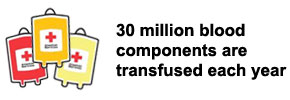
  • A total of 30 million blood components are transfused each year.
  • The average red blood cell transfusion is approximately 3 pints.
  • The blood type most often requested by hospitals is Type O.
  • Sickle cell patients can require frequent blood transfusions throughout their lives.
  • More than 1 million new people are diagnosed with cancer each year. Many of them will need blood, sometimes daily, during their chemotherapy treatment.
  • A single car accident victim can require as many as 100 units of blood


Facts about the Blood Supply

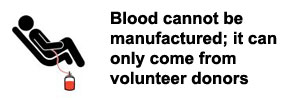
Blood cannot be manufactured – it can only come from generous donors.
Type O-negative blood (red cells) can be transfused to patients of all blood types. It is always in great demand and often in short supply.
Type AB-positive plasma can be transfused to patients of all other blood types. AB plasma is also usually in short supply.


Facts about the Blood Donation Process

  • Donating blood is a safe process. A sterile needle is used only once for each donor and then discarded.
  • Blood donation is a simple four-step process: registration, medical history and mini-physical, donation and refreshments.

  • Every blood donor is given a mini-physical, checking the donor's temperature, blood pressure, pulse and hemoglobin to ensure it is safe for the donor to give blood.
  • The actual blood donation typically takes less than 10-12 minutes. The entire process, from the time you arrive to the time you leave, takes about an hour and 15 min.
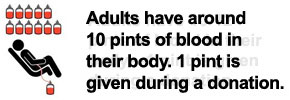
  • The average adult has about 10 units of blood in his body. Roughly 1 unit is given during a donation.
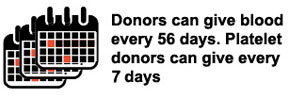
  • A healthy donor may donate red blood cells every 56 days, or double red cells every 112 days.
  • A healthy donor may donate platelets as few as 7 days apart, but a maximum of 24 times a year.
  • All donated blood is tested for HIV, hepatitis B and C, syphilis and other infectious diseases before it can be transfused to patients.

Facts about Blood and its Components

  • Blood makes up about 7 percent of your body's weight.
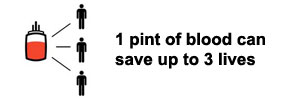
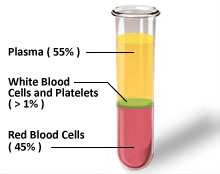
  • There are four types of transfusable products that can be derived from blood: red cells, platelets, plasma and cryoprecipitate. Typically, two or three of these are produced from a unit of donated whole blood – hence each donation can help save up to three lives.
  • Donors can give either whole blood or specific blood components only. The process of donating specific blood components – red cells, plasma or platelets – is called apheresis.
  • One transfusion dose of platelets can be obtained through one apheresis donation of platelets or by combining the platelets derived from five whole blood donations.
  • Donated platelets must be used within five days of collection.
  • Healthy bone marrow makes a constant supply of red cells, plasma and platelets. The body will replenish the elements given during a blood donation – some in a matter of hours and others in a matter of weeks.

Facts about Donors

  • The number one reason donors say they give blood is because they "want to help others."
  • Two most common reasons cited by people who don't give blood are: "Never thought about it" and "I don't like needles."
  • One donation can help save the lives of up to three people.
  • If you began donating blood at age 18 and donated every 90 days until you reached 60, you would have donated 30 gallons of blood, potentially helping save more than 500 lives!
  • Only 7 percent of people in India have O-negative blood type. O-negative blood type donors are universal donors as their blood can be given to people of all blood types.
  • Type O-negative blood is needed in emergencies before the patient's blood type is known and with newborns who need blood.
  • Thirty-five percent of people have Type O (positive or negative) blood.
  • 0.4 percent of people have AB-blood type. AB-type blood donors are universal donors of plasma, which is often used in emergencies, for newborns and for patients requiring massive transfusions.
So, what are you waiting for?

For more health info and promotions, please follow us on Facebook- Wellness Lab
Download Wellness Lab Mobile App now for more promotions 
If you like this article, you can share this to your friends and families , together we share the health information and the taste of a healthy life!

Thursday, 13 August 2015

3 Simple Trick to Reduce Your Stress

Between meeting deadlines, making dentist appointments, and remembering to buy milk, it’s easy for anyone to get stressed. But luckily, staying calm and peaceful no matter what is happening on the outside isn’t as hard as it might sound. Next time your stress levels are starting to hit critical levels, try one of these three easy de-stressing tips.

1. Close Your Eyes

Take a few moments to daydream. Picture yourself laying out on the beach or simply curled up reading a favorite book. By taking your mind and thoughts away from meeting that deadline, you will immediately feel a sense of calmness.

2. Just Breathe

Taking full, deep breaths is an easy way to relax. Inhale and fill your belly with the breath, and then slowly let it out. Feel your chest and your belly release each time and see if you can breathe more deeply with each breath. Do this ten times.

3. Relax Your Muscles

In this exercise, focus on slowly tensing and then relaxing your muscles. If you’re sitting at a desk, tighten your leg muscles for a few seconds and then release. Move slowly up your body, ending at your face. Or, you can begin with your face and shoulders and end at your toes.


Next time your stress levels hit critical levels, try one of these easy stress reduction tips.

For more health info and promotions, please follow us on Facebook- Wellness Lab
Download Wellness Lab Mobile App now for more promotions 
If you like this article, you can share this to your friends and families , together we share the health information and the taste of a healthy life!

We say Tomato, The Doctor say…Tremendous

Tomato? Tremendous!

Eating a rainbow of produce is an effective—and tasty—way to ensure intake of a wide array of nutrients and phytochemicals; and just within the tomato family itself, you can find red, green, yellow, orange, and purple varieties. 


With their low carbohydrate content, fiber, and complement of nutrients, tomatoes fit nicely into many different nutritional strategies, including vegetarian, low-carb, and Paleo-style diets. Due to tomatoes’ natural sweetness, people on very low carbohydrate diets sometimes avoid them, but this isn’t necessary.


Tomatoes—particularly when they’re in season—are sweet, but although they have a slightly higher glycemic index than, say, spinach and broccoli, their glycemic load is extremely low. This means it would take a very large amount of tomatoes to have an adverse impact on blood sugar, although, of course, individual sensitivity to carbohydrate varies. They are a good source of vitamin C, vitamin K1, beta-carotene, and potassium.

Tomatoes are perhaps most touted for their antioxidant phytochemical, lycopene – best known for its role in men’s health (lycopene is the most abundant carotenoid found in the prostate gland). This great antioxidant has other beneficial roles worth mentioning.Lycopene may help prevent sunburn, and studies have shown it also has the potential to be mildly hypocholesterolemic via naturally inhibiting HMG CoA reductase, as well as increasing LDL receptor synthesis.


Interestingly, lycopene concentration is higher in tomato products—such as tomato paste and tomato sauce—than in fresh tomatoes. As a fat-soluble carotenoid, the body absorbs lycopene best when taken with some fat—in case anyone needed an excuse to drizzle a fresh tomato salad with a little olive oil, or sprinkle some cheese over tomato sauce and zucchini noodles. 


As if their flavor and nutrient content weren’t good enough reasons to eat tomatoes, there’s another beneficial substance hiding in tomatoes, tucked away like a little secret: melatonin! Yes, it’s true: tomatoes contain a small amount of melatonin, and it seems to have a similar function in plants as it does in humans: regulation of the circadian rhythm. A study in which multiple tomato cultivars were grown in the same greenhouse, but some were grown in full sunlight while others were shaded, found that the shaded tomatoes had as much as 135% more melatonin than the non-shaded ones, suggesting that light exposure plays a role in their melatonin content, just as melatonin synthesis is regulated by photo-exposure in people.


Some researchers have pointed to the bioactive phytochemicals in various plants as being a key factor contributing to the healthfulness of the Mediterranean diet. In looking at select foods common in certain Mediterranean countries, they noted tomatoes, olive oil, wines, and grape skins, for their melatonin content, which, while small, might still be one part of the multifactorial picture underlying the benefits of this traditional cuisine. At about 250ng/g of dry weight, the melatonin content of tomatoes isn’t enough to act as a sleep aid, but it’s an interesting bit of trivia nonetheless.


Don’t limit yourself to the more common red tomatoes. Other varieties bring enhanced nutritional properties, such as purple tomatoes, which have a higher anthocyanin and antioxidant content. Plant breeders recognize these as providing a longer shelf life and protection against certain plant pests, but they’re helpful for human health, as well. Yellow tomatoes also have something to offer beyond their sweet taste. While the lycopene in red tomatoes has been shown to be helpful in fighting prostate cancer, serum from rats fed yellow tomatoes—which contain no lycopene—has been shown to beneficially influence expression of Connexin43 (Cx43), a protein that regulates cell growth, on human prostate cancer cells in vitro.


Enjoy the bounty of tomatoes and enjoy experimenting in the kitchen with this wonderful food. You can find such a great variety of recipes, both hot and cold, where tomatoes add a splash of flavor, a touch of color, and of course, nutrition galore.

Scramble Egg with Tomatoes
For more health info and promotions, please follow us on Facebook- Wellness Lab
Download Wellness Lab Mobile App now for more promotions 
If you like this article, you can share this to your friends and families , together we share the health information and the taste of a healthy life!

When & How to Wash Your Hands

Keeping hands clean through improved hand hygiene is one of the most important steps we can take to avoid getting sick and spreading germs to others. Many diseases and conditions are spread by not washing hands with soap and clean, running water. If clean, running water is not accessible, as is common in many parts of the world, use soap and available water. If soap and water are unavailable, use an alcohol-based hand sanitizer that contains at least 60% alcohol to clean hands.


When Should You Wash Your Hands?

Touching an animal or animal toys, leashes or waste. Blowing your nose, coughing or sneezing into your hands. Treating wounds or caring for a sick or injured person. Handling garbage, household or garden chemicals, or anything that could be contaminated — such as a cleaning cloth or soiled shoes.

How should you wash your hands?

  • Wet your hands with clean, running water (warm or cold), turn off the tap, and apply soap.
  • Lather your hands by rubbing them together with the soap. Be sure to lather the backs of your hands, between your fingers, and under your nails.
  • Scrub your hands for at least 20 seconds. Need a timer? Hum the "Happy Birthday" song from beginning to end twice.
  • Rinse your hands well under clean, running water.
  • Dry your hands using a clean towel or air dry them.

What should you do if you don’t have soap and clean, running water?

Washing hands with soap and water is the best way to reduce the number of germs on them in most situations. If soap and water are not available, use an alcohol-based hand sanitizer that contains at least 60% alcohol. Alcohol-based hand sanitizers can quickly reduce the number of germs on hands in some situations, but sanitizers do not eliminate all types of germs.

Hand sanitizers are not as effective when hands are visibly dirty or greasy.

How do you use hand sanitizers?

  1. Apply the product to the palm of one hand (read the label to learn the correct amount).
  2. Rub your hands together.
  3. Rub the product over all surfaces of your hands and fingers until your hands are dry.
For more health info and promotions, please follow us on Facebook- Wellness Lab
Download Wellness Lab Mobile App now for more promotions 
If you like this article, you can share this to your friends and families , together we share the health information and the taste of a healthy life!

Tuesday, 11 August 2015

Erectile dysfunction (ED) could mean Clogged Arteries.

Preventing heart disease in patients is every doctor's main goal, but early detection is the next best thing. This can lead to changes in lifestyle and medical therapies that can delay or deny the onset of a heart attack; almost 80 percent of heart disease is preventable with lifestyle changes. Many of patients are shocked to learn about the following clues to underlying heart disease.


4 Silent Signs You may have Clogged Arteries

1. Erectile dysfunction (ED) could mean Clogged Arteries.

Men have a built-in warning system for silent CHD. When achieving an erection is difficult or impossible, it can be a sign of clogged arteries in the pelvis that presents before a heart attack hits. There are, on average, three to five years between the onset of ED and the finding of CHD, which is plenty of time to detect and to work on preventing heart issues. If you and your partner are worried about sexual performance, look for and treat root causes of diseased arteries before just popping a blue pill.


2. Baldness could indicate clogged arteries.

In a comprehensive new study of almost 37,000 men, severe baldness at the crown of the head strongly predicted the presence of silent CHD at any age. In a separate study of more than 7,000 people (including over 4,000 women), moderate to severe baldness doubled the risk of dying from heart disease in both sexes. 


3. Ear Crease might Indicate Clogged Arteries.

One of the stranger markers, a crease in your earlobe (specifically, an angled crease in the ear that runs diagonally from the canal to the lower edge of the earlobe) has been mentioned in medical research reports as a sign of silent CHD for decades. The ear crease may result from poor circulation, including in arteries in the heart. Although some medical professionals have argued that a crease is just a general sign of aging, researchers last year used the most sophisticated CT scan method to measure silent CHD and found that ear crease predicted heart disease even after the authors accounted for other risk factors, such as age and smoking.


4. Calf Pain when you Walk might mean Clogged Arteries.

This is known as claudication (from the Latin for “to limp”). Atherosclerosis can block leg arteries, particularly in smokers, before CHD is diagnosed. This symptom requires an evaluation without delay. Your doctor will examine the pulses in your legs and perform simple measurements of leg blood pressure and blood flow to confirm a diagnosis of poor circulation. It is critical that heart disease be diagnosed as early as possible because there are many dietary and medical treatments that can help reverse the issue. Some of patients took these early clues to heart and advised to eat more plant-based foods and fewer animal products and to start a walking program. Their calf pain completely resolved within weeks and has not recurred for years. 


Anyone with any of the above signs of silent CHD should know his or her numbers (blood pressure, cholesterol, fasting glucose). Ask your doctor if you should be checked for heart disease with an EKG, a coronary calcium CT imaging, or an exercise stress testing. 

For more health info and promotions, please follow us on Facebook- Wellness Lab
Download Wellness Lab Mobile App now for more promotions 
If you like this article, you can share this to your friends and families , together we share the health information and the taste of a healthy life!

Monday, 10 August 2015

5 Ways to Keep Your Spine Healthy and Happy

Our spine has many nerves, muscles, and ligaments that serve as connections to areas throughout your body, so keeping your back in top condition is one of the best things you can do for both your back and your overall health.


These 5 simple tips will help you keep your spine as healthy as possible, minimizing complications from your back condition and helping to prevent future painful episodes.


Let your Spine Really Rest while Sleeping.

While you're sleeping, all the structures in your spine that have worked hard all day finally have an opportunity to relax and be rejuvenated. Using the right mattress and pillow will support the spine so the muscles and ligaments can be stress-free and have a chance to become refreshed.


A large part of the decision about what type of mattress and pillow to use is based on personal preference. As long as the basis for the choice includes ensuring that the correct support and sleeping position will be attained, any of the many available types of mattress can be helpful.


Choose your Shoes Carefully.

Whether you're walking for exercise or just to get where you're going, the shoes you wear have a big effect on your back. They should be well balanced, flexible, and most certainly comfortable. Good shoes not only provide protection for your feet, but also a supportive base that helps the spine and body remain in alignment. Selection of the right shoes, and correctly using inserts if needed to provide even further balance, can help you avoid muscle strain and possible injury.


Enjoy the Benefits of Massage.

Many people love a good massage to relax their muscles and relieve stress. Therapeutic massages not only improve flexibility and decrease tension, they can also improve blood flow and increase the level of endorphins in your bloodstream, which is a chemical in the body that makes us feel good.


While it's not the same as going to a massage therapist, having a massage chair in your home can be a practical and easy way to get some of the benefits of a shiatsu or Swedish massage.


Sit up Straight—with Support.

The discs in your lower spine are loaded 3-times more while sitting than standing, so long periods of sitting can often create or aggravate a painful back condition. Moreover, when sitting in an office chair, many people slouch and lean forward, and this poor posture usually leads to muscle tension and pain in the lower back and legs (e.g. sciatica).


The right office chair plays an important role in promoting good posture and supporting the natural curves of your back. In addition to a comfortable chair, most experts recommend getting up to stretch and walk around every 20 to 30 minutes, as prolonged static posture is stressful for the structures in your spine. You may also consider trying a stand-up desk at work.


Specifically Exercise your Abs and Back.

One of the most important components of good spine health is exercise. Specifically, performing abdominal and back exercises will go far in helping to keep your spine healthy. These exercises are simple and can be performed in 20 to 30 minutes as part of a daily routine.


If your back and abdominal muscles are not in good shape, additional pressure can be put on the spine, which is already under the stress of supporting your entire body. When these muscles are well maintained they help support the spine and minimize the chance of injury.


Summary
The topics covered here are simple ways to help your spine and back stay in alignment and maintain a stronger, healthier you. Even if you are in very bad pain and are undergoing extensive medical treatments, we encourage you to still try to remember the simple things you can do for your back to help it heal and get stronger and healthier over time.


For more health info and promotions, please follow us on Facebook- Wellness Lab
Download Wellness Lab Mobile App now for more promotions 
If you like this article, you can share this to your friends and families , together we share the health information and the taste of a healthy life!