Total Pageviews

Friday, 18 September 2015

Easy Ways to Start Exercising

Exercise doesn’t have to be an all-or-nothing proposition. You don’t have to spend hours in a gym or force yourself into monotonous or painful activities you hate to experience the physical and emotional benefits. Adding just a little physical activity to your weekly routine can have a profound effect on your mental and emotional health. Whatever your age or fitness level—even if you’ve never exercised a day in your life before—you can find simple, fun ways to add more movement into your life and start to feel better, look better, and enjoy life more.


How much exercise do you need?

Exercising moderately for 30 minutes, five times a week is one of the best things you can do for your physical and mental health. Can’t find 30 minutes in your busy schedule? That’s okay, two 15-minute workouts or three 10-minute workouts can be just as effective.


If that still seems like a daunting amount of time to spend exercising, don’t despair. Even just a little physical activity is better than none at all. Try starting by taking a short walk on most days, and gradually build up the length of your sessions from there. It takes about 4 weeks for an activity to become a habit so commit to maintaining your schedule for at least that long. As exercising becomes habit, you can slowly add extra minutes or try different types of activities. If you keep at it, the benefits you experience will begin to mount.


Start Slowly—a Little is Better than Nothing

Exercise doesn’t need to be an all or nothing commitment. If you haven’t exercised before or you’ve tried an exercise program in the past and been unable to stick with it, it’s important not to set unrealistic goals. Committing to exercise for an hour a day in a gym may be too challenging at first, whereas committing to 10 minutes just three or four times a week is more manageable. Once these short windows of activity become a habit and you start experiencing the benefits, it’s easier to progress to the next level.

Start Slowly—a Little is Better than Nothing

Tips for Getting Started in an Exercise Program 

  • Focus on activities you enjoy. If you hate jogging, you won’t be able to maintain a jogging program no matter how good it is for you. On the other hand, if you love to swim, dance, or play tennis you’ll find it easier to sick with an exercise program that’s built around those activities. 
  • Take it slow. Start with an activity you feel comfortable doing, go at your own pace, and keep your expectations realistic. For example, training for a marathon when you’ve never run before may be a bit daunting, but you could give yourself the goal of participating in an upcoming 5K walk for charity. 
  • Focus on short-term goals, such as improving your mood and energy levels and reducing stress, rather than goals such as weight loss or increased muscle size, as these can take longer to achieve. 
  • Make exercise a priority. If you have trouble fitting exercise into your schedule, consider it an important appointment with yourself and mark it on your daily agenda. Commit to an exercise schedule for at least 3 or 4 weeks so that it becomes habit, and force yourself to stick with it. Even the busiest amongst us can find a 10-minute slot to pace up and down an office staircase or take the dog for a walk. 
  • Go easy on yourself. Do you feel bad about your body? Instead of being your own worst critic, try a new way of thinking about your body. No matter what your weight, age, or fitness level, there are others like you with the same goal of exercising more. Try surrounding yourself with people in your shoes. Take a class with others of a similar fitness level. Accomplishing even the smallest fitness goals will help you gain body confidence. 
  • Expect ups and downs. Don’t be discouraged if you skip a few days or even a few weeks. It happens. Just get started again and slowly build up to your old momentum.
Stay focused

For more health info and promotions, please follow us on Facebook- Wellness Lab
Download Wellness Lab Mobile App now for more promotions 
If you like this article, you can share this to your friends and families , together we share the health information and the taste of a healthy life!

-Click the Picture Below to Uncover Wellness Lab Latest Promotion Now-

Thursday, 17 September 2015

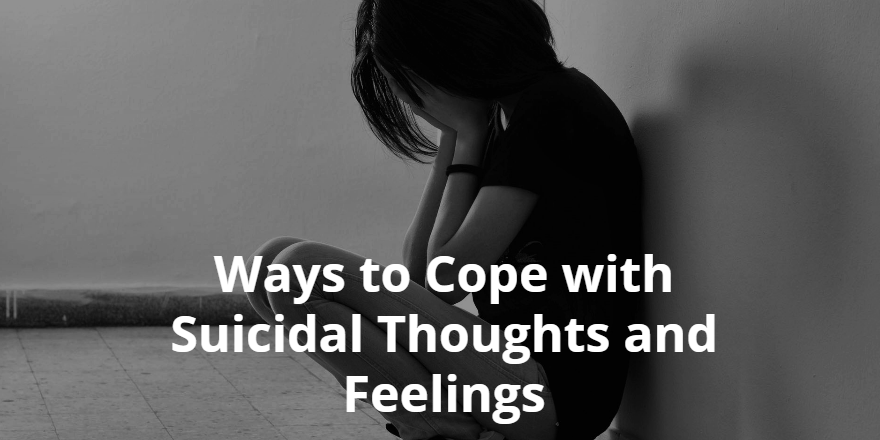
Ways to Cope with Suicidal Thoughts and Feelings

Remember that while it may seem as if these suicidal thoughts and feelings will never end, this is never a permanent condition. You WILL feel better again. In the meantime, there are some ways to help cope with your suicidal thoughts and feelings. 


Things to do

  • Talk with someone every day, preferably face to face. Though you feel like withdrawing, ask trusted friends and acquaintances to spend time with you. Or continue to call a crisis helpline and talk about your feelings. 
  • Make a safety plan. Develop a set of steps that you can follow during a suicidal crisis. It should include contact numbers for your doctor or therapist, as well as friends and family members who will help in an emergency. 
  • Make a written schedule for yourself every day and stick to it, no matter what. Keep a regular routine as much as possible, even when your feelings seem out of control. 
  • Get out in the sun or into nature for at least 30 minutes a day. 
  • Exercise as vigorously as is safe for you . To get the most benefit, aim for 30 minutes of exercise per day. But you can start small. Three 10-minute bursts of activity can have a positive effect on mood. 
  • Make time for things that bring you joy. Even if very few things bring you pleasure at the moment, force yourself to do the things you used to enjoy. 
  • Remember your personal goals. You may have always wanted to travel to a particular place, read a specific book, own a pet, move to another place, learn a new hobby, volunteer, go back to school, or start a family. Write your personal goals down. 

Things to avoid:

  • Being alone. Solitude can make suicidal thoughts even worse. Visit a friend, or family member, or pick up the phone and call a crisis helpline. 
  • Alcohol and drugs. Drugs and alcohol can increase depression, hamper your problem-solving ability, and can make you act impulsively. 
  • Doing things that make you feel worse. Listening to sad music, looking at certain photographs, reading old letters, or visiting a loved one’s grave can all increase negative feelings. 
  • Thinking about suicide and other negative thoughts. Try not to become preoccupied with suicidal thoughts as this can make them even stronger. Don’t think and rethink negative thoughts. Find a distraction. Giving yourself a break from suicidal thoughts can help, even if it’s for a short time.


Lifeline Association of Malaysia 
71-2nd Floor, Jin Jejaka 2
55100
TMN MALURI 
Contact by: Face to Face  - Phone 
Hotline: (063) 92850039
Hotline: (063) 92850279
Hotline: (063) 92850049


For more health info and promotions, please follow us on Facebook- Wellness Lab
Download Wellness Lab Mobile App now for more promotions 
If you like this article, you can share this to your friends and families , together we share the health information and the taste of a healthy life!

-Click the Picture Below to Uncover Wellness Lab Latest Promotion Now-

Teenager Suicide Help


You're not alone; many of us have had suicidal thoughts at some point in our lives. Feeling suicidal is not a character defect, and it doesn't mean that you are crazy, or weak, or flawed. It only means that you have more pain than you can cope with right now. This pain seems overwhelming and permanent at the moment. But with time and support, you can overcome your problems and the pain and suicidal feelings will pass.

If you’re feeling suicidal right now, please call for help! Talk to someone you trust and let them know how bad things are.

Step #1: Coping with suicidal thoughts: 

Even though you’re in a lot of pain right now, give yourself some distance between thoughts and action. Make a promise to yourself: "I will wait 24 hours and won't do anything drastic during that time." Or, wait a week.

Thoughts and actions are two different things—your suicidal thoughts do not have to become a reality. There’s is no deadline, no one pushing you to act on these thoughts immediately. Wait. Wait and put some distance between your suicidal thoughts and suicidal action.


Step #2: Avoid drugs and alcohol
Suicidal thoughts can become even stronger if you have taken drugs or alcohol. It is important to not use nonprescription drugs or alcohol when you feel hopeless or are thinking about suicide.

Step #3: Make your home safe

Remove things you could use to hurt yourself, such as pills, knives, razors, or firearms. If you are unable to do so, go to a place where you can feel safe. If you are thinking of taking an overdose, give your medicines to someone who can return them to you one day at a time as you need them.

Step #4: Take hope—people DO get through this

Even people who feel as badly as you are feeling now manage to survive these feelings. Take hope in this. There is a very good chance that you are going to live through these feelings, no matter how much self-loathing, hopelessness, or isolation you are currently experiencing. Just give yourself the time needed and don’t try to go it alone.

Step #5: Don’t keep these suicidal feelings to yourself

Many of us have found that the first step to coping with suicidal thoughts and feelings is to share them with someone we trust. It may be a friend, a therapist, a member of the clergy, a teacher, a family doctor, a coach, or an experienced counselor at the end of a helpline. Find someone you trust and let them know how bad things are. Don’t let fear, shame, or embarrassment prevent you from seeking help. Just talking about how you got to this point in your life can release a lot of the pressure that’s building up and help you find a way to cope.


Lifeline Association of Malaysia 
71-2nd Floor, Jin Jejaka 2
55100
TMN MALURI 
Contact by: Face to Face - Phone
Hotline: (063) 92850039
Hotline: (063) 92850279
Hotline: (063) 92850049


For more health info and promotions, please follow us on Facebook- Wellness Lab
Download Wellness Lab Mobile App now for more promotions 
If you like this article, you can share this to your friends and families , together we share the health information and the taste of a healthy life!

-Click the Picture Below to Uncover Wellness Lab Latest Promotion Now-
Wednesday, 16 September 2015

Experts Say Don't Eat Too Much Rice

New research, published in the British Medical Journal, has found high-consumption of white rice to be associated with an increased risk of developing type 2 diabetes. The increase in risk was especially noted in Asian populations.


The study wasn't clear on just why white rice may impact diabetes risk, but as Time.com notes, it may have to do with its high score on the glycemic index (GI), meaning it could cause spikes in blood sugar. Read it yourself:


Rice becomes sugar - lots of it

This is a fact that no nutritionist can deny: rice is chemically no different from sugar. One bowl of cooked rice is the caloric equal of 10 teaspoons of sugar. This does not matter whether it is white, brown or herbal rice. Brown rice is richer in fiber, some B vitamins and minerals but it is still the caloric equal of 10 teaspoons of sugar. To get the same 10 teaspoons of sugar, you need to consume lots of water spinach - 10 bowls of it.


Rice is digested to become sugar.

Rice cannot be digested before it is thoroughly cooked. However, when thoroughly cooked, it becomes sugar and spikes circulating blood sugar within half an hour - almost as quickly as it would if you took a sugar candy.


Rice has no fiber - Unless add with Vege 

The fiber of the water spinach fills you up long before your blood sugar spikes. This is because the fiber bulks and fills up your stomach. Since white rice has no fiber, you end up eating lots of "calorie dense" food before you get filled up. Brown rice has more fiber but still the same amount of sugar.


Rice is tasteless - Sugar is sweet. 

There is only so much that you can eat at one sitting. How many teaspoons of sugar can you eat before you feel like throwing up? Could you imagine eating 10 teaspoons of sugar in one seating? As rice is tasteless, you tend to consume more salt - another villain when it comes to high blood pressure. You tend to take more curry that has salt to help flavor rice. We also tend to consume more ketchup and soy sauce which are also rich in salt.


According to the study, decreasing levels of physical activity and an increase in food consumption in general may make Asian populations more susceptible to the effects of eating a lot of white rice.


Go on "rice-less" days - Go "western" once a week. Take no rice and breads for one day every week. That can't be too difficult. Appreciate the richness of your food. Go for taste, colors and smells. Make eating a culinary delight. Enjoy your food in the original flavors.

For more health info and promotions, please follow us on Facebook- Wellness Lab
Download Wellness Lab Mobile App now for more promotions 
If you like this article, you can share this to your friends and families , together we share the health information and the taste of a healthy life!

-Click the Picture Below to Uncover Wellness Lab Latest Promotion Now-

A Bee Sting Requires You To Act Quickly

If a bee stings you, your first step may sound obvious — but it’s incredibly important: Remove the stinger as quickly as possible, says Dr Reshma Patel, an emergency medicine physician at New York University Langone Medical Center.


Here’s why: “The stinger contains a venom sack, and the faster you scrape it off, pinch it off, or remove it, the less venom will make it into your system,” says Dr. Patel.

In fact, a study from the University of Arizona found that 90 percent of a honeybee’s venom sac is delivered within 20 seconds of the sting. Use whatever you have on hand to get rid of the stinger, Dr. Patel says. The side of a credit card, a butter knife, and tweezers all work best — but if you’re outside, you probably won’t have any of those items handy. In that case, your fingernail will do the trick.


Remove the Sting:
Regardless of what you use, be as gentle as you can while removing the stinger to avoid squeezing more venom into your body. Venom contains proteins that trigger your body to release an inflammatory molecule called a histamine, which causes itching, redness, and irritation, Dr. Patel says.

When the stinger is out, scrub up: 
The break in your skin can lead to an infection if bacteria are able to get in, so wash the area thoroughly with soap and water to reduce your risk — and to remove any remaining venom.


Apply Ice:
If you’re still experiencing burning, redness, and swelling at the spot of the sting, apply an ice pack to the site for about 20 minutes to soothe the reaction. Most mild responses should resolve within a couple hours, but research suggests you can speed up the process by elevating the part of your body where you got stung. This helps reduce swelling.

The final step: 
Apply a hydrocortisone cream, such as Cortizone-10, which reduces skin inflammation and any itching. Then take an anti-histamine, such as Benadryl, to further reduce inflammation and your body’s allergic response.

Take extra caution if you’ve experienced anaphylaxis — a life-threatening reaction — to an allergen in the past. You’ll have a greater chance of experiencing it again when exposed to another allergen, like a sting, Dr. Patel says. Signs of a severe reaction: swelling of your throat, tongue, or eyes; difficulty breathing; nausea, vomiting, or diarrhea; dizziness; and loss of consciousness.


In any of these cases, call 995. “Paramedics can start you on medications such as IV fluids, Benadryl, or a shot of epinephrine to control the reaction,” says Dr. Patel.

For more health info and promotions, please follow us on Facebook- Wellness Lab
Download Wellness Lab Mobile App now for more promotions 
If you like this article, you can share this to your friends and families , together we share the health information and the taste of a healthy life!

-Click the Picture Below to Uncover Wellness Lab Latest Promotion Now-

Tuesday, 15 September 2015

8 Superfoods You Probably Aren’t Eating

Sometimes we get caught up in the routine of eating the same foods over and over again. Often times it’s not that healthful eating isn’t tasty, but rather it’s the lack of variety. Adding a variety of super nutrient dense foods to our diet ensures that we’re getting the laundry list of vitamins and minerals that the body needs to thrive.


Most aspects of a healthy diet are quite obvious. We know that fruits and vegetables are healthy and processed foods are not healthy. Too much meat and fried foods are also not healthy. There are, however, those foods that we should be eating but for one reason or another we tend to overlook. 

Consider superfoods that you haven’t yet added to your diet along with some ideas about how to put them to work in your favorite recipes.

1. Spirulina

Spirulina is a blue green algae that’s a wonderful food especially for those that avoid meat products. Though this is certainly true of everyone, a deficiency in B12 is more common in vegans and some vegetarians because B12 is found in animal products. If you’re feeling really tired and rundown, you might not be getting enough. There is no whole food source of B12 for vegans, except for spirulina. What’s more, spirulina has iron. A deficiency of iron, also called anemia, is a very common ailment in our population. Add spirulina to shakes and smoothies by the spoonful.


2. Adzuki Beans

They’re smaller than black beans and reddish brown in color but loaded with nutrients. In fact, these little guys contain some of the highest levels of protein and lowest levels of fat of any variety of beans. They also contain high levels of potassium, fiber, B vitamins, iron, zinc, and manganese. Adzuki beans promote regular bowel movements, are a good source of energy, and help lower cholesterol. 


3. Kukicha Twig Tea

It’s called twig tea and it’s been around for centuries. It’s made with the stems, stalks, and twigs of the tea plant. Initially, farmers sipped on the tea because it was what was leftover from the harvesting of the more expensive leaves. It’s known as a peasant’s drink in Japan but in the West we’ve started to praise the health benefits of the tea for its ability to promote longevity. It’s especially known for its ability to balance acidity in the body, which can lead to disease and ill health down the line.


4. Fenugreek Seed

Fenugreek is an herb that is commonly used in the Mediterranean region of the world. It’s a good herb to reduce menstrual cramps, cholesterol, menopause symptoms, and help control diabetes.


5. Grapefruits

Grapefruits contain monoterpenes which sweep the body of carcinogens.They also contain vitamin C and folic acid.


For more eating healthy tips, talk to your physician about how you can stay on track and not give in to your cravings.

For more health info and promotions, please follow us on Facebook- Wellness Lab
Download Wellness Lab Mobile App now for more promotions 
If you like this article, you can share this to your friends and families , together we share the health information and the taste of a healthy life!

-Click the Picture Below to Uncover Wellness Lab Latest Promotion Now-

Simple Teachings: Understand Your Beating Heart

The human heart is a muscular organ that performs the function of ensuring continuous blood flow through the cardiac cycle. Because it performs this essential function, it is one of the most important organs in the human body.


The human heart has a mass of between 250 and 350 grams, and it is usually about the size of a fist. It is enclosed in a protective sac called the pericardium. The pericardium has a fluid which nourishes the heart itself, and also protects the heart from any jolts and shocks that the body may experience.


The outer wall of the human heart is composed of three layers. The outermost layer is called the epicardium, and it is the inner wall of the pericardium. The middle layer is called the myocardium, and it is made of up muscular tissue that is capable of contracting. The innermost layer is called the endocardium, and it is is contact with the blood that the heart circulates around the body.


The human heart consists of four chambers:

Right atrium: The upper part of the heart that receives oxygen-depleted blood from the body. It is supplied by the superior vena cava. It pumps this blood through the tricuspid valve into the right ventricle.

Right ventricle: The lower part of the heart that gets oxygen-depleted blood from the right atrium. It then pumps this blood through the pulmonary valve into the lungs via the pulmonary artery.

Left atrium: The upper part of the heart that gets oxygen-rich blood from the lungs through the pulmonary veins. It pumps it through the bicuspid or mitral valve into the left ventricle.

Left ventricle: The lower part of the heart that gets oxygen-rich blood from the left atrium. It pumps this blood through the aortic valve to the entire body through the aorta, including to the heart itself.


Obesity, high blood pressure, and high cholesterol can increase the risk of developing heart disease. However, half the number of heart attacks occur in people with normal cholesterol levels. Heart disease is a major cause of death.

It is generally accepted that factors such as exercise, diet, and overall well-being, including both emotional and physiological components, affect heart health in humans.


For more health info and promotions, please follow us on Facebook- Wellness Lab
Download Wellness Lab Mobile App now for more promotions 
If you like this article, you can share this to your friends and families , together we share the health information and the taste of a healthy life!

-Click the Picture Below to Uncover Wellness Lab Latest Promotion Now-